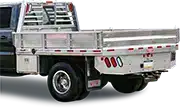
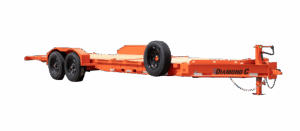
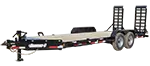
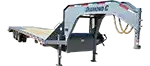
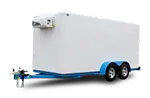
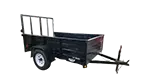
Low-profile ramp loading
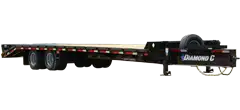
A deck between the fenders keeps loading height lower. A strong choice for tractors, skid steers and construction equipment when traditional ramps fit the workflow.
Compare LPX, HDT, HXD, DEC, DET, GDD and DSA models by deck layout, loading system, payload and real equipment measurements.
Measure the machine at its widest and longest points, record loaded weight with attachments, and check ground clearance. Those facts usually narrow the Diamond C lineup faster than starting with price or GVWR alone.
A deck between the fenders keeps loading height lower. A strong choice for tractors, skid steers and construction equipment when traditional ramps fit the workflow.
Hydraulic-dampened tilt operation removes ramp handling. Stationary-deck choices can create room for attachments or additional cargo.
Full deck width supports wider equipment and side-loaded pallets. The higher platform requires closer attention to loading angle and center of gravity.
Combines full deck width with powered tilt loading. Useful when ramp-free loading and deck-over width are both priorities.
A specialized 102-inch-wide tilt choice. Confirm tire or track placement, equipment overhang and legal width before deciding.
Designed for compact machinery such as lifts and smaller equipment where a heavy tandem-axle trailer would be unnecessary.
| Question | Ramps may fit better | Tilt may fit better |
|---|---|---|
| How often do you load? | Occasional loading makes ramp setup less important. | Frequent loading makes reduced setup and lifting more valuable. |
| What is the machine clearance? | Ramp and dovetail combinations can be selected around approach needs. | Confirm breakover angle carefully, especially with low-clearance equipment. |
| Do you carry multiple items? | A fixed deck can be straightforward for varied cargo placement. | A stationary front deck can carry attachments while the rear bed tilts. |
| What maintenance do you prefer? | Mechanical ramps are simple but include hinges, springs and storage. | Tilt systems remove ramps but add hydraulic components and operating checks. |
Include buckets, forks, attachments, fuel, tools and anything carried on the trailer.
Measure the widest tires, tracks, attachments or guards—not the brochure’s base width.
Include attachments and allow space for safe placement and tongue-weight adjustment.
Low steps, mower decks, outriggers and undercarriage components affect the loading angle.
Know where chains or straps can legally and safely attach to the machine.
Review towing, hitch, axle, tire and available payload ratings for the actual truck.
Available on selected heavy-duty equipment models, this design changes the beam profile to place steel according to structural demand. Verify the frame used on the exact model and configuration.
A gooseneck can change turning, truck-bed requirements, hitch load and available deck configuration. It is not automatically the right choice for every truck or route.
Frequent heavy-use customers should compare tire packages and available electric-over-hydraulic disc brakes, along with service access and replacement cost.
Heavy-duty or drive-over fenders and max-width extensions may help wide machines, but dimensions and loading path need confirmation.
A properly selected winch can assist disabled machines. Mount, electrical supply, line pull, fairlead and safe recovery technique all matter.
Toolboxes, chain storage, D-rings, stake pockets and rub rail should be placed around the cargo you carry most often.
Model families and features were reviewed against Diamond C’s official 2026 Equipment & Tilt Trailer Buyer’s Guide and current model lineup. Specifications and options can change and vary by build.
Long enough for the complete machine and attachments while allowing safe load placement and tongue weight. Extra unused deck adds cost and empty weight, so measure first.
No. It provides full-width deck space and easy side loading, but it sits higher. A low-profile deck between the fenders may load more comfortably when the machine fits the usable width.
The trailer rating alone cannot answer that. Check the truck’s configuration-specific towing, payload, axle, tire, hitch and combined-weight limits, then account for passengers, tools and hitch load.
Yes. Select an in-stock trailer first, then use the shipping-quote form with its stock number and destination.
Send the machine model, attachments, weight and tow-vehicle information. We can compare current inventory or help configure a build.
Please enter your contact information and one of our representatives will get back to you with more infomation.