








Plan the Business Before You Choose the Trailer
A mobile business trailer is more than an enclosed trailer with equipment installed inside.
It has to function as a workspace, customer-service area, mobile storefront and business investment.
Planning the complete operation before ordering can prevent expensive changes later.
Use this guide to organize the major decisions for a mobile coffee trailer, mobile bar,
retail trailer, office or marketing trailer, concession-style business or other specialty mobile operation.
Spencer Trailers can then help you organize those needs when requesting an Aero Build trailer quote.
1. Define What the Business Will Do
Start with the business itself rather than the trailer. The trailer should be designed around the work
that will actually happen inside it.
Products or Services
List exactly what you plan to sell or provide. A coffee operation, beverage trailer,
mobile boutique and marketing trailer all require very different layouts.
Customer Volume
Think about expected customers per hour, peak periods, event traffic and whether orders
will be taken at one window and delivered through another.
Staffing
Decide how many employees will normally work inside the trailer. Counter space and aisle width
that work for one person may become crowded with three or four people.
Where You Will Operate
Consider festivals, permanent locations, private events, parking lots, campuses,
business districts or traveling routes. Location can affect power, water and permit requirements.
2. Choose the Right Mobile Business Trailer Type
Mobile Coffee Trailers
Plan around espresso equipment, grinders, refrigeration, sinks, fresh water,
electrical demand, customer service and employee workflow.
Explore Coffee Trailers →
Mobile Bar & Beverage Trailers
Consider beverage preparation, refrigeration, sinks, serving windows,
tap-system needs, storage and event service.
Explore Mobile Bar Trailers →
Retail, Office & Marketing Trailers
Plan product displays, storage, customer flow, workstations, electrical service,
branding and how customers interact with the trailer.
Explore Retail & Office Trailers →
Explore the Aero Build Line
Compare mobile business and lifestyle trailer options available through Spencer Trailers.
View Aero Build Trailers →
3. Plan the Interior Layout and Workflow
A good layout reduces unnecessary movement. Before choosing cabinet locations,
windows or counters, picture a normal customer transaction from beginning to end.
- Where will customers place orders?
- Where will payment be taken?
- Where will products or drinks be prepared?
- Where will finished orders be delivered?
- Where will supplies and inventory be stored?
- Where will employees stand during busy periods?
- Which equipment needs frequent access?
- Which equipment creates heat or requires ventilation?
Service-window location can have a major effect on workflow. Door placement,
counter depth, cabinets, appliances and employee traffic should be considered together.
4. Build a Complete Equipment List
Do not simply list appliance names. Gather the actual specifications for every major piece of equipment.
This information helps determine whether the proposed trailer can support the equipment safely and practically.
Dimensions
Record width, depth and height so cabinets, counters and aisle clearances can be planned accurately.
Weight
Equipment, water, inventory and installed components all contribute to total trailer weight.
Electrical Requirements
Record voltage, amperage and plug requirements for espresso machines,
refrigerators, freezers, warmers, lighting and other powered equipment.
Water & Drainage
Identify equipment that requires fresh water, drains, pumps,
water heating or wastewater capacity.
For coffee operations, you can also use our
Mobile Coffee Trailer Equipment Checklist.
5. Calculate Electrical Demand Before Ordering
Electrical planning should happen before the trailer is built—not after the equipment arrives.
High-demand commercial appliances can require substantially more power than household equipment.
Document the electrical requirements for every major appliance and consider whether the business
will use shore power, generator power or another approved power source at operating locations.
Items commonly requiring electrical planning include:
- Espresso machines and coffee brewers
- Refrigerators and freezers
- Ice machines
- Water heaters
- Blenders and food-preparation equipment
- Heating or warming equipment
- Air conditioning and climate control
- Interior and exterior lighting
- Point-of-sale systems
- Signage and display equipment
6. Plan Fresh Water, Wastewater and Plumbing
Food and beverage businesses may require fresh-water storage, wastewater tanks,
hand sinks, compartment sinks, pumps and water heating. Requirements vary by location
and by the type of products being prepared or served.
Water also adds significant weight. Tank size, placement and expected operating capacity
should be considered as part of the complete trailer design.
7. Confirm Local Codes and Permits Early
Requirements can vary by city, county, state, health department, fire authority
and intended business use. A configuration accepted in one location may not automatically
be accepted somewhere else.
Before approving a final build, contact the agencies responsible for your intended operating area
and obtain written requirements whenever possible.
Questions may involve:
- Food-service or health-department requirements
- Sink configuration
- Fresh-water and wastewater capacity
- Commercial equipment requirements
- Ventilation or fire-suppression requirements
- Electrical standards
- Propane or gas-system rules when applicable
- Business licensing
- Parking and vending-location rules
- Fire inspection
- Accessibility requirements
Use our
Mobile Business Trailer Permits and Code Checklist
to organize these questions.
Important: Spencer Trailers can help you collect and organize information,
but local authorities determine whether a mobile business is approved to operate in their jurisdiction.
8. Consider Trailer Weight and Tow Vehicle Capacity
The finished weight of a mobile business trailer can be very different from the weight of an empty trailer.
Installed equipment, cabinetry, water, inventory, batteries and supplies all add weight.
When planning the build, consider:
- Trailer GVWR
- Expected finished trailer weight
- Equipment weight
- Fresh-water weight
- Inventory and supply weight
- Tow vehicle ratings
- Hitch and towing requirements
Never choose a tow vehicle based only on trailer length. Use the vehicle manufacturer’s
published towing, payload and hitch ratings for the specific vehicle configuration.
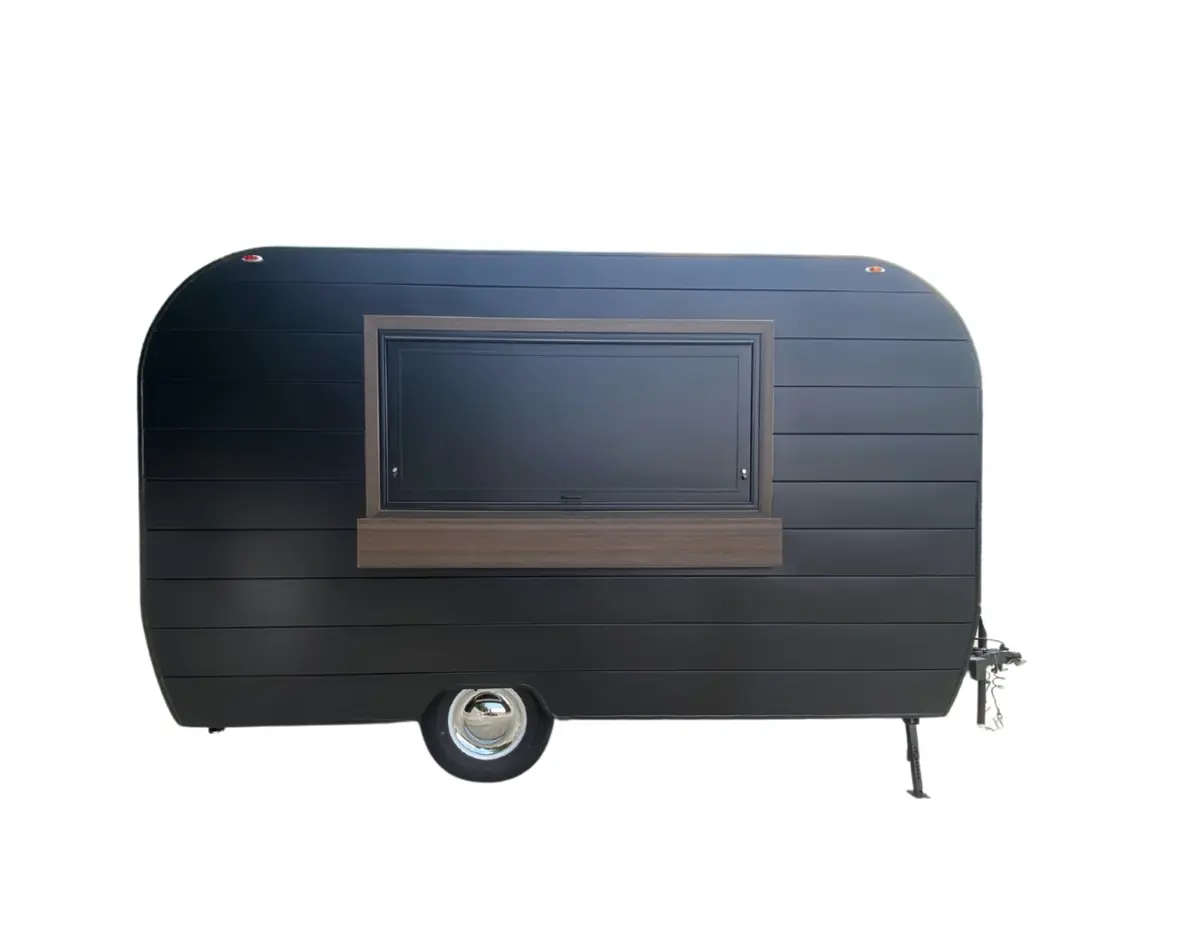
9. Plan Service Windows, Doors and Customer Flow
Windows and doors are major layout decisions because changing them later can be difficult and expensive.
Consider which side of the trailer will face customers and how the trailer will normally be positioned.
Think about:
- Number of service windows
- Window width and location
- Order window versus pickup window
- Serving counter height
- Employee entry door position
- Customer lines and waiting areas
- Awning or weather protection needs
10. Design the Trailer Around Your Brand
For many mobile businesses, the trailer itself is one of the most visible pieces of advertising the company owns.
Exterior appearance should be considered during the buying process rather than treated as an afterthought.
Plan:
- Exterior color
- Logo placement
- Full or partial vehicle wrap
- Menu boards or promotional signage
- Service-window appearance
- Exterior lighting
- Social-media-friendly presentation
11. Build the Entire Startup Budget
The purchase price of the trailer is only one part of the investment.
A realistic budget should include the complete cost required to open the business.
Trailer & Build
Base trailer, installed cabinetry, counters, utilities, windows and selected options.
Business Equipment
Appliances, refrigeration, point-of-sale systems, shelving, fixtures and specialty equipment.
Opening Costs
Permits, licensing, insurance, initial inventory, supplies and business setup expenses.
Transportation & Branding
Tow vehicle requirements, delivery costs, graphics, wraps and exterior signage.
12. Review Financing Before Finalizing the Build
If financing will be part of the purchase, it is useful to understand available options
before finalizing the trailer configuration and total project budget.
13. Plan Delivery and Your Desired Completion Date
Custom business trailers require coordination between trailer selection,
equipment planning, manufacturing and delivery. If you have a festival,
grand opening, contract or seasonal deadline, provide that information early.
Spencer Trailers can also help buyers request delivery pricing based on destination.
14. What to Have Ready When Requesting a Quote
The more information you provide, the more useful the initial conversation can be.
You do not need every detail finalized, but these items are especially helpful:
- Your business or organization name
- Mobile business type
- Products or services you plan to offer
- Preferred trailer size
- Number of employees working inside
- Required equipment and appliances
- Electrical requirements
- Fresh-water and plumbing needs
- Number and location of service windows
- Local code requirements you have already obtained
- Exterior color and branding ideas
- Approximate budget
- Financing interest
- Delivery destination ZIP code
- Desired completion date
Mobile Business Trailer vs. a Permanent Storefront
A trailer and a traditional storefront solve different business problems.
Mobility can allow a business to attend events, test markets and serve multiple locations,
while a permanent storefront may provide more working and storage space.
If you are still deciding which approach fits your business,
read our comparison:
Talk With Spencer Trailers About Your Aero Build
You do not need to have every answer before contacting us.
Tell us what you want your mobile business trailer to do, what equipment you expect to use
and where you plan to operate. Spencer Trailers can help organize the trailer,
equipment, financing and delivery questions for your Aero Build quote.
More Mobile Business Planning Resources
Starting a Mobile Coffee Trailer Business
Review the major planning decisions involved in launching a mobile coffee operation.
Read Guide →
Coffee Trailer Equipment Checklist
Organize equipment, refrigeration, water, sinks and electrical requirements.
View Checklist →
Permits & Code Checklist
Prepare the questions to discuss with local authorities before ordering.
View Checklist →
Aero Build Trailers
Explore mobile business and lifestyle trailers available through Spencer Trailers.
Explore Aero Build →